BUR – A Step-by-Step Guide to Obtaining Training Grants
BUR will help finance training costs—up to 100%. Learn how to choose a service, complete the paperwork, and settle the funding step by step. Check it out!

If you want to train your team and significantly reduce development costs, BUR may be your simplest option. The Development Services Database is a place where companies and individuals can find verified training programs and financial support—often covering up to 100% of the costs. Sound good? In practice, it works when you approach the topic as you would a project: clearly define your goals, choose the right provider, and efficiently navigate the paperwork. This guide will walk you through the entire process, from definition to settlement.
We’ll explain what BUR is, who stands to benefit most from it, and what the steps involve: registration, selecting a service, applying for funding, and final settlement. You’ll also learn how to evaluate the quality of the program—especially if you’re interested in AI simulations, quick feedback, and the ISO 9001:2015 standard. And if you’re planning to develop your sales, customer service, or leadership teams, we’ll throw in ready-made pathways. Let’s start with the basics, without any marketing hype.
Who is this not a good fit for? If you need training “for tomorrow,” don’t want to sign any documents, and prefer a one-time session with no billing—you’re better off choosing a commercial option without BUR’s involvement. But if your goal is scalable team growth and smart use of your budget, the funding process could be a game-changer. Want to explore your options? Start by learning about training grants and tailor a track to your goals.
What is BUR and Who Is It For?
The Development Services Database (BUR) is a nationwide platform that aggregates training programs, courses, and development services from verified providers. The idea is simple: in one place, you can compare programs, dates, and learning formats—from workshops to modern training sessions using VR technology and artificial intelligence. This makes it easier to tailor the offering to your team’s actual needs, rather than to a randomly selected program. It’s a tool that brings order to the market and raises the bar for quality.
Who is BUR designed for? For companies that want to develop their employees’ competencies in a structured and measurable way, but also for individuals planning their own development path. Sales and customer service teams, as well as leaders, are eager to use BUR because the results are immediately visible in conversations with customers and in day-to-day managerial decisions. HR and L&D departments are also increasingly joining in to build internal competency academies.
The key advantage? The opportunity to obtain financial support through selected programs and in specific regions. In practice, this means you choose a service that interests you, check the availability of funding, and proceed according to clear guidelines. If you’re looking to develop communication, negotiation, or feedback skills, it’s worth considering soft skills training based on realistic scenarios. It’s precisely these types of programs that are easiest to translate into concrete results at work.
The reality of the office is often more revealing than presentations. In practice, most teams start with one key module, and after seeing the first noticeable results—such as a shorter sales cycle or fewer escalations—they add more. This is a safe way to implement changes without turning your schedule upside down. And this is exactly the approach BUR is best suited for.
How to Use BUR Step by Step
The process is logical and—importantly—repeatable. First, create an account and profile; then select a service and review the support terms; next, complete the formalities; and finally, settle the bill after the training is finished. Along the way, it helps to have a clear goal: which KPIs or behaviors are supposed to change? This makes it easier to justify your choice and get through the approval process faster.
Registration and Participant or Company Profile
Start by creating an account and setting up a profile—either as an individual or as a company. Fill in your basic information, indicate the areas of expertise you want to develop, and describe your team’s needs. It may sound like a formality, but a well-prepared profile makes it easier later on to match services and compare offers. This is also the time to write down specific goals: shortening response times to customers, increasing conversion rates in discovery calls, or improving the quality of feedback.
If you’re acting on behalf of an organization, prepare the basic administrative information—so that subsequent requests can be submitted without having to run around collecting signatures. Also designate a contact person who will receive confirmations and keep track of deadlines. In practice, this saves hours of back-and-forth emails. And fewer emails mean more growth—that’s something everyone can get behind.
Selecting a Service and Processing Funding
Go to the search engine and narrow down your selection by topic, format (online, VR, blended), level, and date. Review the program description, how results are verified, and user reviews. If you want to boost sales, check out our sales training courses—short, practical modules that are easy to fit in between client meetings. With every choice, focus on the impact on your work, not just the course title.
Once you’ve selected a service, review the financing terms, submit your application, and sign the required documents. Typically, you pay your own contribution (if required), and the remaining costs are settled according to the agreement after the training is completed. It’s simple: you complete the program, the provider issues the documents, and you settle the funding according to the established procedure. If you’d like to see what the program looks like in practice beforehand, simply schedule a demo.
Training Funding: What You Can Use It For and How Much It Covers
Financial support under the BUR program can be allocated to specific, practical skills—such as sales, negotiations, customer service, communication, leadership, or team management. What matters is that the impact is measurable on the job: shorter call times, higher customer satisfaction, and better one-on-one interactions with employees. Programs based on simulations and scenario-based exercises are particularly effective here, as it’s easier to evaluate them later in terms of results. And the result has a name: a specific metric.
How much will the funding cover? It depends on the program’s terms, but options are available that cover up to 100% of the costs. Just remember that the funding level and the scope of eligible expenses are determined by the program regulations, not by the training offer itself. That’s why it’s always worth checking the current rules and tailoring the scope of services to the funding requirements. If your goal is to grow sales, check out the tracks where we combine hands-on training with funding support: sales training with funding.
What exactly can the funds be used for? For participation in training sessions, materials, and development resources that are an integral part of the program. It’s crucial that the expense be justified and that the program be implemented as described—then the reimbursement process goes smoothly. The company is responsible for monitoring attendance and documentation, while the provider is responsible for delivering valuable content and confirmations. When these two sides work together, funding isn’t a hindrance—it’s a help.
How to Choose Effective Training: Outcomes, AI Simulations, and ISO 9001:2015
Start at the end: what behaviors are supposed to change after the training, and which metric will show that. In sales, this will be conversion from the first conversation or a shorter deal cycle; in customer service—NPS/CSAT and the percentage of issues resolved on the first contact; for leaders—the quality of one-on-one interactions and the clarity of goals. Once you know why you’re doing this, it’s easier to compare programs and choose the one that delivers results, rather than just a “wow” effect in the training room. It’s best if the program follows a structured approach: theory – practice – mastery.
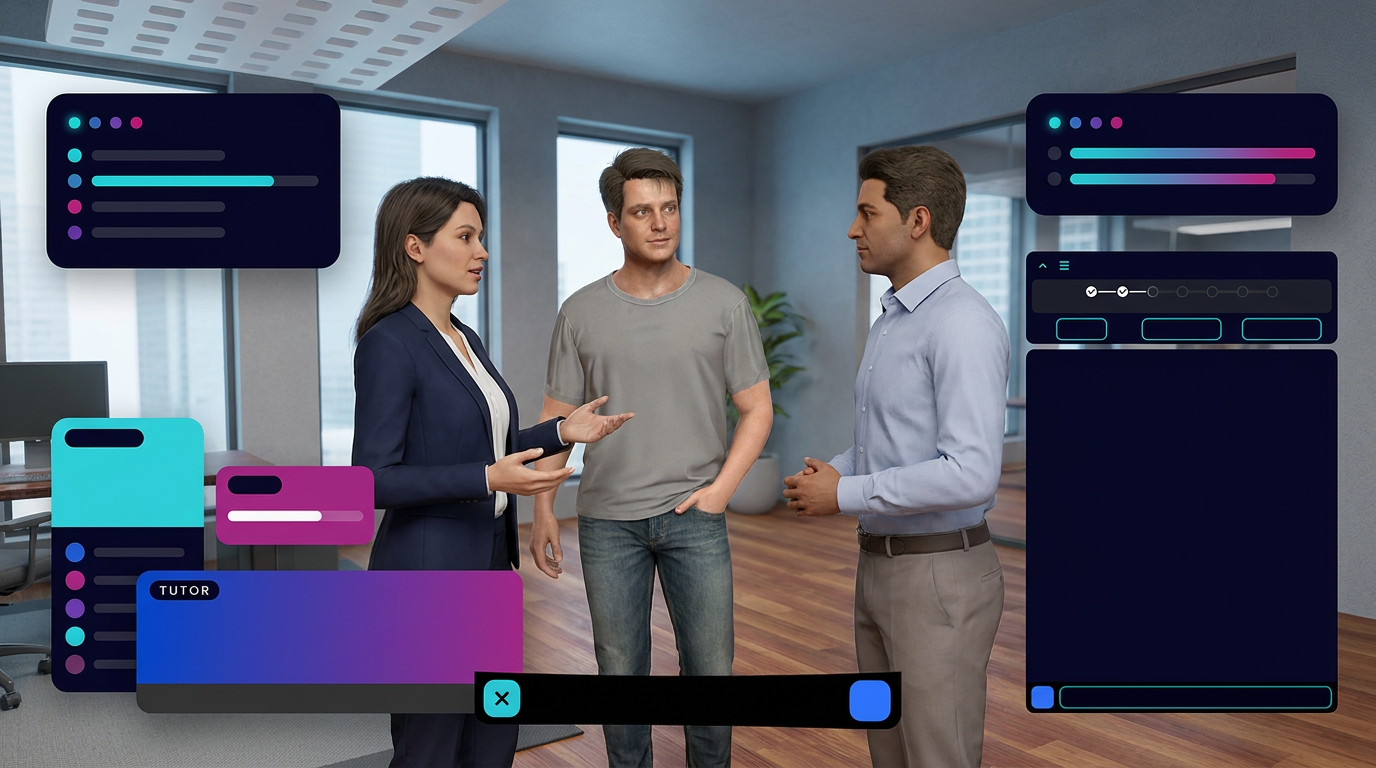
Simulations using artificial intelligence provide a safe, stress-free environment for practicing conversations—without judgment and without a training room. Participants work through realistic, role-specific scenarios, receive immediate data-driven feedback, and repeat the exercises until they reach mastery. The solution works in a web browser and in VR, so it requires no installation or complex infrastructure. It’s learning that happens right here and now, between meetings.
The quality of the process is also confirmed by the ISO 9001:2015 standard for quality management, which we follow at Metaskills. Thanks to this standard, the way we design, implement, and improve our programs is structured and predictable. In practice, this means a consistent participant experience and better measurability of outcomes. And this, in turn, translates into meaningful accountability for results within the BUR framework.
A brief real-world example: one of our business partners confirmed that a program focused on constructive feedback led to more effective communication within their organization—they appreciated the combination of technology, scenarios, and the feedback system. This is a clear indication that when training is designed with practical application in mind, change happens faster and lasts longer. And that’s the effect we’re after—not just a one-time burst of enthusiasm.
Development paths for teams: sales, customer service, leaders
Sales. A series of short modules focused on critical moments works best: discovery calls, needs assessment, value proposition, negotiations, and closing the deal. Each stage is a separate loop: theory – exercise – mastery in an AI simulation. See how we put this into practice through pathways that drive results: our sales training programs. This approach bridges the gap between “knowing” and “doing” in literally one click.
Customer service. Here, empathy, conversation structure, and de-escalating tension are key. Participants practice in realistic scenarios: dealing with a difficult customer, written communication, and restoring satisfaction after a mistake. Well-designed soft skills training with immediate feedback helps turn knowledge into new habits. The first result organizations notice? Fewer escalations and more issues resolved on the first contact.
Leaders. The biggest difference comes from the quality of one-on-one interactions, clarity of expectations, delegation, and feedback. Programs for managers should be structured modularly, with room for exercises and review—so that every conversation with an employee becomes just a little better. When a culture of feedback becomes the norm, turnover drops, and goals are achieved more predictably. It’s not magic—it’s the result of a consistent process.
And when does it not make sense? When a team can’t set aside even 30 minutes a week for practice, or when you don’t want to work based on data and feedback—then even the best tools won’t deliver change. However, if you want to see how AI simulations and a structured learning cycle can support your goals, simply schedule a demo. BUR provides the financial framework, and well-designed training delivers the results. This combination works.