Peer-to-peer feedback training
Practise giving and receiving difficult feedback in realistic conversations with AI-powered avatars.

The problem
What participants practise
Structuring a feedback conversation
You open the conversation, describe the situation, check the other side's view and agree what happens next, instead of improvising under stress.
Active listening
You practise asking questions, paraphrasing and checking whether you understood correctly, so the other person feels heard before you move on.
Naming behaviours, not judging personality
You describe what was said or done and what effect it had, instead of labelling character. The conversation stays with facts, not accusations.
Managing emotions
You practise staying calm when the conversation gets tense: recognising your own reaction, keeping the tone steady and returning to the point.
Responding to resistance
The avatar can deny, argue or shift the blame. You practise a response that does not escalate the conflict and does not withdraw your message.
Closing with next steps
You end with a clear agreement: what changes, who does what and when you come back to it. The conversation leads to action, not only to relief.
Scenario preview
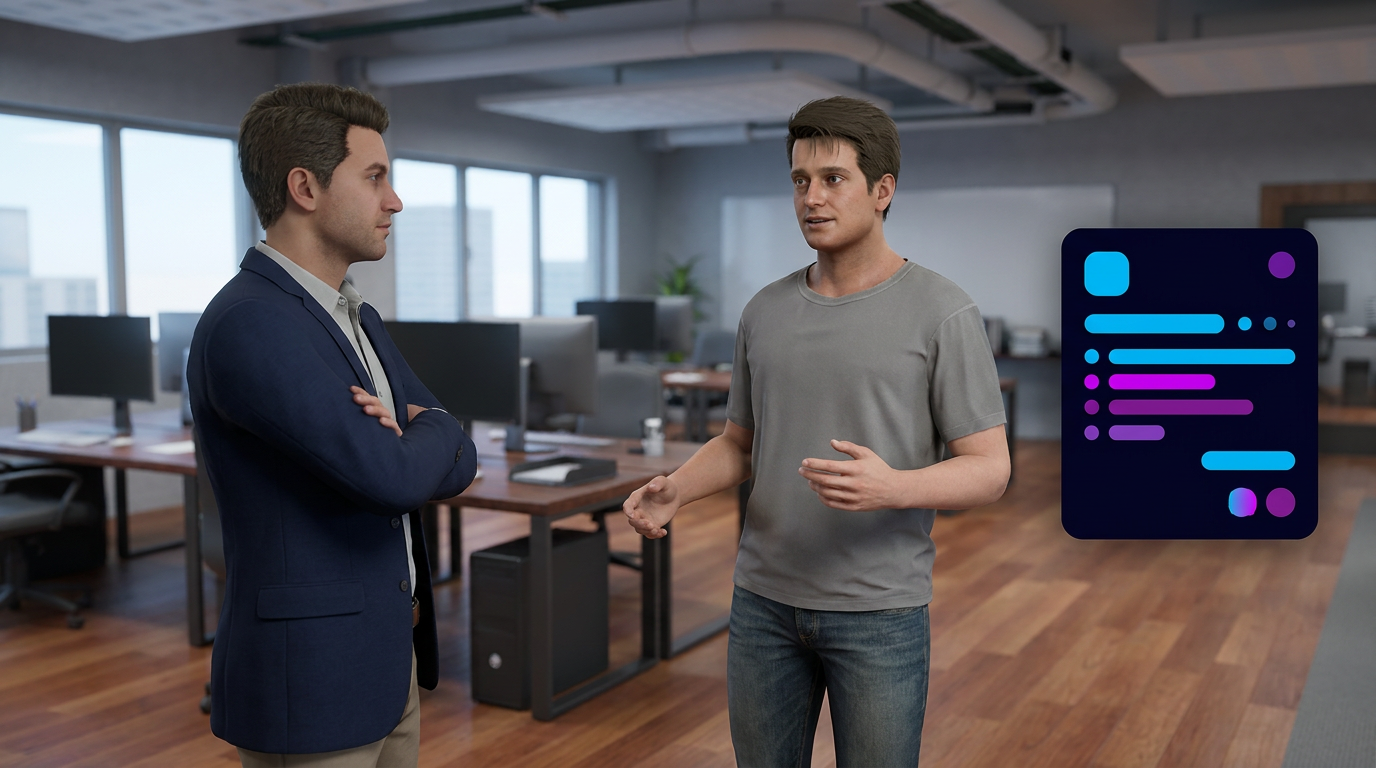
Conversation with Alex
Alex disrupts the team’s work by speaking loudly during calls. The goal is not to attack him, but to give clear, respectful and constructive feedback.

Conversation with Margo
After a difficult project, you speak with Margo about cooperation, tension and what both sides can improve in the future.
How the training works
Preparation
Simulation
Self-assessment
AI feedback
Repeat and improve
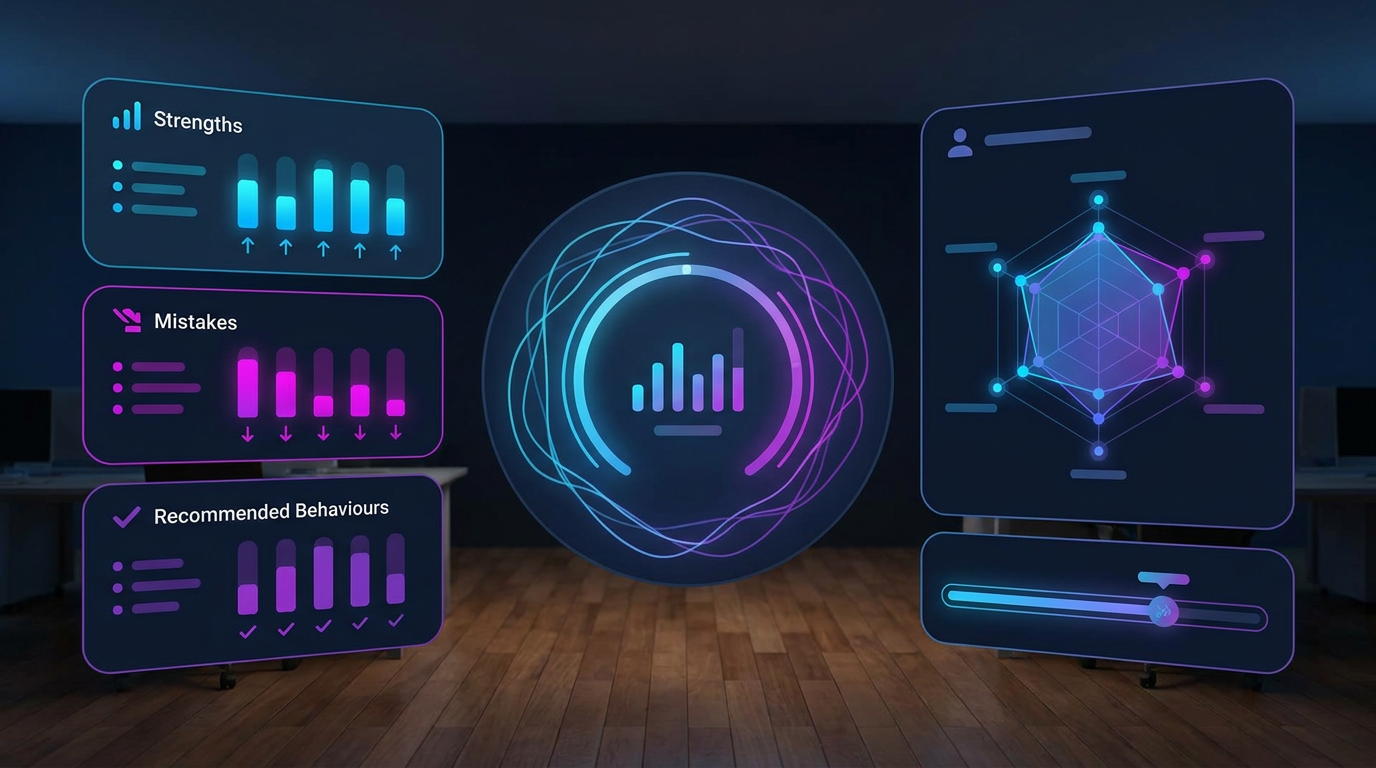
Feedback and the Digital Twin
Each simulation generates structured feedback that can contribute to the user’s competency profile. Over time, Metaskills can help map progress, identify skill gaps and benchmark performance across users or teams.
Explore Digital TwinAvailable formats
Web simulation
You hold the conversation in a browser, with no headset required. A low-barrier way to try a scenario and to repeat it whenever there is time.
VR simulation
The same scenario in a headset: you stand in the room with the avatar. The higher pressure brings the practice closer to a real conversation.
Blended learning
You practise in simulations between workshop or coaching sessions, and the results of those conversations become material to discuss with a trainer.
Enterprise path
A rollout across the organisation: scenarios adjusted to your context, access for many teams and results that can feed the Digital Twin profile.
Who it’s for
Managers
If you give feedback to your team, you can rehearse the hardest cases here first: recurring behaviour, appraisals, conversations you keep postponing.
Team leaders
You lead people day to day, often without formal authority. Here you practise addressing missed commitments, conflict and the tone within the team.
HR / L&D
You roll the module out across teams, set one shared feedback standard and use the results to see where communication support is needed.
Project teams
Peer-to-peer feedback with no manager in the middle: deadlines, quality of handovers and cooperation after a difficult project.
Healthcare managers
You lead teams under time pressure, where an unspoken conflict quickly shows up in how a shift works together and in the quality of care.
Customer-facing teams
Sales, service and support: you practise feedback on the tone of a conversation, handling a difficult client and the quality of case handovers.
What you gain