How to Become a B2B Salesperson: Career Path, Skills, and First Steps
Learn how to become a B2B sales specialist: explore the career path, build relevant experience, develop core skills, and start confident conversations with buyers.

This guide explains how to become a B2B salesperson, build relevant B2B sales experience, develop the skills the role requires, and choose a practical path into the profession. If you have a knack for conversation but also enjoy mental puzzles involving numbers, processes, and people, this role may be a strong fit. B2B sales is not about persuading at all costs, but about helping companies make smarter decisions. You will work with multiple people on the buyer’s side, build trust, and exercise patience, because company decisions are rarely made overnight. It can feel challenging at first, but it is a skill you can learn step by step.
We’ll start by exploring what B2B sales really is today and why it attracts ambitious people. Then we’ll go through the three most common paths into the profession so you can choose the one that fits your experience. I’ll show you the skills that actually make a difference when talking to decision-makers—not just on paper. You’ll also get a plan for your first 90 days—with goals, a pipeline, and a work rhythm that will give you an edge. Finally, I’ll throw in tips on how to build credibility on LinkedIn and within your network without coming across as a “salesperson.” Ready for a plan that makes sense from week one?
What B2B sales is all about today—and why it attracts top talent
B2B sales is about having a business conversation in which your product or service is a tool to solve a specific problem, not an end in itself. Instead of listing features, you help the client calculate the cost of inaction and the value of change. This means you discuss processes, risks, priorities, and the impact on the P&L—not just the “gadgets” in your offering. Increasingly, sales also involve moderating an internal discussion at the client’s organization—different departments have different interests, and you need to help them find common ground. The winner isn’t the one who talks the most, but the one who best structures the decision-making process and facilitates the purchase.
On the buyer’s side, the decision is rarely made by a single person—more often, there are 3–7 stakeholders: a business sponsor, a financial sponsor, an operations sponsor, an IT sponsor, and future users. This naturally lengthens the sales cycle and adds stages: discovery, requirement clarification, demo or POC, security verification, procurement, and legal review. The good news is that a well-structured process makes complexity more manageable and shortens the sales cycle by weeks. In practice, this means transparent opportunity qualification, reaching out broadly to several people within the organization, and clear “next steps” after each meeting. When a client sees the plan and milestones, they’re more willing to move forward with you.
Why is this role so attractive to top talent? Because it combines an impact on results with continuous learning and real autonomy. You see your contribution to change: the company streamlines its processes, end customers are satisfied, and you get the sense that your work matters. On top of that, there’s the opportunity to work with executive boards, CFOs, and COOs—this accelerates your growth because you learn about the business firsthand. And the earning potential is higher than in many other career paths, provided you can consistently deliver on the plan.
In the background, you have a solid set of tools: CRM for organizing the pipeline, systems for message sequencing, activity analytics, and data on purchase intent. However, the tools alone don’t sell anything—it’s a consistent process and your conversations that do. The best salespeople treat technology as support, not an excuse to send out thousands of templates. Instead, they personalize their outreach, test hypotheses, and refine them after every interaction. It’s a craft that rewards consistency more than one-off “fireworks.”
How to Become a B2B Sales Specialist: Three Possible Starting Paths
There are various ways to become a B2B sales specialist, and none of them is the “only right” one. What matters is finding the path that aligns with your strengths and what you want to do on a daily basis. If you enjoy initiating conversations and aren’t discouraged by an initial “no,” starting out in prospecting might be ideal. Once you have deep industry knowledge, it will be easier for you to build trust as a consultant who understands the client’s reality. And if you’re currently delivering results in customer service, understand client needs, and know how to grow those accounts, a natural next step is often transitioning to a full-cycle sales role.
Starting as an SDR/BDR: Prospecting, Cold Calling, and Outbound Leads
The SDR/BDR role is about learning to generate demand: you identify accounts, reach the right people, and turn curiosity into meetings. Your workday is a mix of phone calls, emails, and LinkedIn outreach, less “selling,” more opening conversations. You practice short, specific messages that highlight a problem and invite a dialogue, rather than a monologue. You measure not only the number of outreach attempts but, above all, the responses and the quality of the scheduled calls. If you’re wondering how to become a B2B sales specialist in a structured way, this role is a springboard: you quickly build resilience, learn the language of decision-makers, and see what works in practice.
From Industry Expert to Sales: How to Leverage Your Know-How
Engineer, consultant, marketer, analyst, if you understand the challenges of a given industry “from the inside,” you have an advantage in building credibility. Clients are more likely to trust someone who knows the real limitations of their processes and can speak their language. However, the key is to shift from “explaining features” to “guiding the purchasing decision.” This is facilitated by working with conversation frameworks, building a library of customer stories, and measuring results in terms of time, cost, risk, and revenue. With this foundation, you’ll find it easier to step into an advisory role rather than that of a “demo presenter,” and that’s a difference clients sense within the first few minutes of a meeting.
Advancing from Customer Support to Sales: Step by Step
If you’re currently leading implementations or developing client relationships, you know their goals, barriers, and context best. Start by taking responsibility for expansions within existing accounts, this is a natural “training ground” for sales conversations in a safe environment. Practice identifying new needs, mapping stakeholders, and creating an action plan with clear milestones. Once you see that you can guide a client from concept to decision, the transition to the full sales cycle, prospecting and closing, is just a matter of time. Work with your manager to establish success metrics and a competency plan so that a promotion isn’t a surprise, but a logical step in your career.
Soft and hard skills that make a difference
The most valuable asset in B2B is curiosity combined with the discipline of active listening. Good questions take the conversation from “what we offer” to “what’s standing in the way of achieving the goal and how will we measure it.” Instead of five quick questions, it’s better to ask two in-depth questions and summarize what you’ve heard in your own words. Setting the agenda, managing the meeting’s time, and clearly wrapping up with the next step help the client feel like they’re part of a process rather than facing chaos. And when the client says “it’s expensive,” don’t automatically defend the price—return to the value proposition and the decision of “we do something or nothing,” along with the costs of inaction.
On the “hard” side, what matters is CRM hygiene and pipeline math: how many opportunities are in the pipeline, at what stage they are, what their probability of success is, and when they’re realistically likely to close. It’s about predictability, not wishful thinking—you know what you need to do today to see results in a few months. It’s also important to be able to write short, concise messages that provide context for the customer and end with a logical call to micro-action. Then there are phone calls: a clear reason for contacting them, a reference to the caller’s role, and a value proposition in two sentences. Each of these elements is a craft that you hone through hundreds of iterations, not a single “magic” formula.
Business acumen is just as important as sales techniques. In practice, this means understanding how a company makes money, where costs are leaking, and what the metrics used by management mean. When you can calculate that shortening the process by a week results in concrete savings in labor time and frees up revenue faster, the conversation takes on a different tone. Guesswork gives way to calculations, and “a nice slide” gives way to concrete facts. This is the language that builds a partnership and makes it easier to justify the investment within the client’s organization.
Rapid growth comes from a feedback loop: you practice, record, analyze, and implement improvements. Ask for feedback regularly—from your manager, colleagues, and the clients themselves, because their perspective is often the most valuable. A short session listening to a call and two specific changes for the following week are more effective than three hours of theory. If you want to systematize this habit, check out our approach to feedback—a simple ritual that turns insights into action. Over time, skill-building becomes a process rather than a series of random motivational “jerking” attempts.
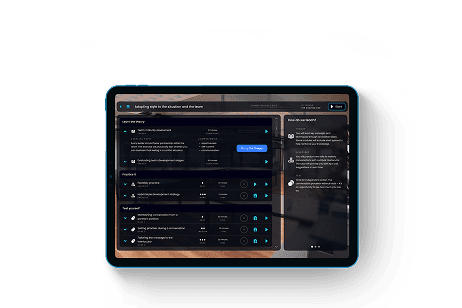
If you want a structured way to practise discovery, value, and objection-handling conversations, explore our sales training scenarios designed for realistic client interactions.
Plan for the First 90 Days: Goals, Pipeline, and Work Rhythm
Days 0–30 are a phase of intensive learning and initial attempts. You’ll learn about your ideal customers (ICP), personas, use cases, and competitors, while simultaneously compiling a list of accounts and hypotheses about the problems you can solve. You listen in on team conversations, note down the questions that spark the best discussions, and jot them down in your own playbook. During this time, also start your first market outreach efforts: short series of messages, a few calls a day, and testing different communication angles. The goal isn’t to set an “activity record,” but to gather signals about what actually resonates.
Days 31–60 are about validating and scaling what works. Set weekly qualitative goals: the number of meaningful conversations, the response rate to messages, and the number of meetings with the right roles on the client side. Regularly eliminate leads that show no promise—wasting time hurts more than missing a single opportunity. Work with your manager to refine the qualification criteria and secure your first quick wins, even if they’re small. If you’re looking for specific tools for this stage, check out our starter materials—checklists and templates make it easier to stay consistent.
Days 61–90 are about building predictability: the pipeline should cover the sales plan several times over, taking into account realistic win rates. You begin multi-threading with key accounts, meaning you deliberately reach out to several roles and synchronize the takeaways from your conversations. You tighten up your forecasting: clear stages, criteria, and a specific date for the next step on the calendar—not just “sometime in Q3.” You turn weekly opportunity reviews with your manager into decisions about “what to drop, where to escalate, and where you need help from a domain expert.” This way, you know where you stand and free up time for actions that move things forward.
The work rhythm is simple but relentless: plan the day the night before, set aside blocks of deep work for prospecting and follow-ups, and after each block, briefly summarize your takeaways. Once a week, a retrospective: what to add, what to cut, and what to change in your messages and conversations. Once a month, a tactical review: which sequences and topics are working, and which ones need to be removed from the playbook. Treat your process like a product—iterate in small steps, measure results, and document best practices. This habit builds resilience against fluctuations and drives results even when the market isn’t cooperating.
LinkedIn, networking, and case studies—how to build credibility
Start with a profile that highlights the problems you help solve, rather than stating that you “sell X.” Include a headline that highlights value for the buyer, an “About Me” section with a brief story about how you drive decisions, and featured materials: a presentation deck, a short guide, or a demo. Post short takeaways from conversations regularly (anonymously), specific comparisons of options, and questions that spark good discussion. Comment on posts by clients and thought leaders with added value, rather than just saying “great post!” You’ll also find more practical inspiration on our website—consistency matters more than flashy gestures.
Networking doesn’t have to mean attending every event. It’s better to have a small but active network with whom you exchange insights and contacts. After meetings, write short summaries with one specific “next step,” and keep your word when you make a promise. Over time, you’ll build a reputation as someone worth talking to, because you don’t waste time and you organize topics clearly. When a bigger opportunity arises, ask for warm introductions—it cuts to the chase and increases your response rate.
Case studies don’t have to be elaborate publications with charts right away—start with short stories in this format: problem → approach → result. One sentence about the starting point, two sentences about what you did, and one about the change—preferably with a number or a specific metric. Build up a “library of evidence” like this and weave it into conversations, messages, and presentations, tailoring the example to the audience. If you’re wondering how to become a B2B salesperson, remember: it’s social proof and a clear narrative—not superlatives—that build your credibility. The client wants to see that you understand their context and can predict what will happen after implementation.
Frequently asked questions
How can I get B2B sales experience without a sales title?
Start with work that puts you close to customer problems: customer support, implementation, consulting, or industry-specific roles. Volunteer to support account expansions, join client calls, and document what you learn about stakeholders and buying decisions. Prospecting projects and practice conversations can also give you relevant, transferable experience.
Is a B2B sales specialist different from a B2B salesperson?
The titles vary between companies, but both usually focus on helping business clients evaluate and buy a solution. A B2B sales specialist may have deeper knowledge of a product, industry, or stage of the sales process. A salesperson may own a broader set of activities, from prospecting through closing.
How do I get into B2B sales from another field?
Use your existing domain knowledge as a starting point. If you understand an industry’s processes, risks, and priorities, you can have more credible conversations with buyers. Learn basic prospecting, qualification, CRM discipline, and business-value communication, then look for roles where your previous customer or industry experience is useful.
Read more