B2B lead qualification that generates more training inquiries
More training inquiries thanks to effective B2B lead qualification. Learn about the practical process: quick response, key questions, and steps leading up to a demo. See

B2B lead qualification helps training providers identify serious prospects, ask the right questions, and move them efficiently toward a demo. More training inquiries don’t always result from a larger advertising budget. More often, it comes down to responsiveness, the quality of the initial conversation, and well-planned next steps. If the client’s team includes HR, L&D, a sales manager, and a finance representative, you can’t leave the initial contact to chance. A few precise pieces of information gathered at the outset help separate curiosity from genuine buying intent. Then, you need to maintain the momentum all the way through to the scheduled demo.
Training sales have their own unique challenges: a dispersed purchasing committee, implementation deadlines tied to quarterly goals and budget allocations or grants. That’s why effective qualification goes beyond simply asking, “What’s the budget, and when?” Context is what matters: why is this training needed, who specifically is it meant to change, and how will the results be measured? Add to that one simple fact—the sooner you start the conversation, the greater the chance that the client will choose you over someone else. Anyone who’s put in the work knows just how much this shortens the path to a decision.
Why You’re Losing Valuable Training Inquiries Right from the Start
First of all—response time. A lead reaches out after a webinar, but doesn’t get a reply until tomorrow afternoon. In the meantime, the competition has already called, asked for more context, and proposed a quick 20-minute meeting. Your message, though substantive, reaches someone who is mentally “already past the conversation.” Speed isn’t aggression; it’s respect for the energy the client just brought to you.
Second—forms and opening questions. If they’re too general (“we want sales training”) or too complicated (10 required fields just to get started), they kill precision or the desire to click “send.” A better approach is to ask a few questions that set the context: the number of people to be trained, the start date (e.g., Q3), the contact person’s role, and the main challenge (onboarding, conversion, price negotiations). That’s enough to start a meaningful conversation without wasting time.
Third—the lack of a natural next step. People don’t like to feel lost. If you end your response with a vague “let me know when it works for you,” you’re asking the client to do extra work. A clear proposal works much better: two time slots to choose from, a link to a calendar, and a brief agenda. These are the little details that determine whether the meeting will actually take place.
And finally—language that doesn’t address the real pain points. “We’ll run a great communication training session” isn’t enough when salespeople are struggling to close deals on price, and the manager wants to shorten the onboarding time for new hires. Concrete details attract concrete results: “We’re working on negotiation scripts, and we measure the impact by the number of agreed-upon next steps and the quality of follow-up”—that’s a real business conversation.
Who is this not for? If you have just a few leads per month and your team calls each one within an hour of receiving the lead—don’t overcomplicate things. Talk to everyone, note the context, and write brief summaries after each meeting. Elaborate processes won’t add value; they’ll just create more work.
Qualifying B2B Leads in Training Sales: What Really Matters
Good B2B lead qualification answers four questions: what is the business objective of the project, who makes the decision, when is it realistically set to launch, and how will it be funded. In training, there’s an additional question: “How will you implement this in your organization?”—because the training session itself is just the beginning; you need a plan for transferring the knowledge to the workplace. That’s why you should check not only “whether there’s a budget,” but also “whether the organization knows how to implement the training and measure its impact.” This sets the tone for the entire conversation.
The purchasing committee can be a diverse group: a business sponsor, HR/L&D, team managers, and someone from finance. If you only have HR on the first call, make it easier to get the rest on board: suggest a short demo with a sales manager and one finance representative. Agree in advance on what each person wants to see (e.g., conversation scenarios, progress reporting, process compliance). This speeds up the decision and builds trust.
It’s also worth paying attention to “timing cues”: the start of a new quarter, the launch of a major hiring drive, CRM implementation, or preparations for the season. In practice, most teams realize that this is precisely when discussions about training become concrete—because change is already underway anyway. Your role is to align with the company’s rhythm, not to fight the calendar.
And if you lack the language and tools for such conversations, start by building a shared framework for your team. Check out our sales training programs—we work with real-world scenarios and measurable behaviors, not just theories.
Lead Scoring for Training: How to Identify Readiness for a Conversation
Scoring doesn’t have to be complicated to work. A simple matrix is all you need: intent (what the lead says), behavior (what they do), profile (whether they’re a good fit for us), and timing (whether a decision is on the horizon). Based on this, you set thresholds and determine next steps—a quick phone call, an email offering a demo, or nurturing. Remember, though: even the best scoring won’t make up for a lack of response in the first few hours. Otherwise, it just won’t work.
Buying signals in forms, emails, and conversations
Words speak volumes. “We have a Q3 deadline,” “deployment for 40–60 people,” “we’re looking for solutions to discuss pricing”—these are high-intent signals. Questions about integrations, reporting, and data security also raise the priority. On the other hand, “we want to get a feel for the topic” or “maybe someday” are leads to nurture with content and light outreach, not for an immediate demo. During a phone call, look for specifics: Is there a sponsor? What does the approval process look like? What are the obstacles?
Content engagement: demos, case studies, pricing
Anyone who goes through case studies, checks the price list, and comes back several times is closer to making a decision than someone who just downloaded an e-book. The recency of the signal also matters: activity in recent days carries more weight than clicks from the past. If someone started booking a meeting but stopped—that’s a great time for a quick call offering two available dates. Match behavior with the company’s profile so you don’t waste time on leads who will never buy.
The context of budget and up to 100% funding
The budget doesn’t end the conversation; it structures it. If a lead doesn’t have the funds “right now” but has strong intent and a deadline, suggest ways to secure funding or break the implementation down into phases. In many projects, access to grants is key—review the opportunities offered by training subsidies and weave this into the conversation as an option. The mere fact that you’re helping them navigate the paperwork can be a game-changer.
The process from initial contact to the scheduled demo: who, when, and how
Establish clear roles. The SDR is responsible for the initial contact and pre-qualification; the AE takes over for more complex conversations and conducts the demo. There’s a simple SLA between them—a high-intent lead gets a call as soon as possible, and if they don’t answer, an email is sent with two time slots and a brief agenda. Call notes follow a shared template so everyone knows what’s already been discussed. No guesswork, full continuity.
The contact sequence should combine phone calls, email, and LinkedIn—with a clear goal: a conversation or a short demo. In practice, a second phone call that refers to specific details opens the most doors (“You mentioned 50 new hires since July—I’ll show you what the onboarding process looks like using specific scenarios”). Adjust your tone to the role: with HR, discuss onboarding and reporting; with a manager, discuss behavioral changes and results; with finance, discuss costs and risks.
Eliminate friction before the meeting: include a link to your calendar, a clear agenda, and sample scenarios. It’s a good habit to attach a short video titled “What You’ll See in the Demo”—this boosts attendance. If you use automated replies, include a “Schedule a Demo” button right away along with the two nearest time slots. When a lead signs up on their own, you save yourself a few back-and-forth emails.
Handing off to an Account Executive isn’t just a matter of forwarding the email. Provide a brief summary: who the sponsor is, who’s blocking progress, what they expect after implementation, and what their concerns are. Add a note about funding if the topic of finances came up—this is often a separate process within the client’s company. This kind of process discipline turns individual opportunities into a predictable sales funnel.
How to Use AI and VR in Qualification: Quick Role-Plays and Checklists
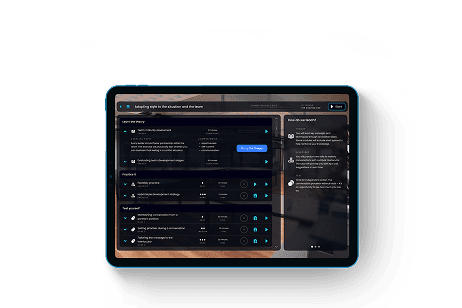
The biggest difference? Training for cold calls and initial outreach. Simulations with realistic avatars let you practice the first 60 seconds, asking for context, and a soft close to set up a meeting—without stress, but with immediate feedback. These are specific micro-skills that determine whether a lead will proceed to the next stage of the conversation.
Personalized learning paths shorten the time from a misstep to improvement. A salesperson who struggles with budget questions receives a series of short scenarios focused solely on that topic, followed by behavior-based feedback. You review the conversation and see where you should have asked more questions, or where the salesperson moved too quickly to the offer. This is learning grounded in real-world situations, not in slides.
Accessibility matters, too. Solutions that work in a browser and in VR, without installation or configuration, lower the barrier to entry. You can run a short role-play right before a call block or do a 15-minute practice session on handling price objections. A little effort goes a long way in boosting confidence.
Finally, add checklists. After an interview, the system reminds you of four key questions, tags the answers (deadline, number of people, budget source, next step), and generates a short summary to send to the client. This standardizes quality and brings order to your CRM—especially as your team grows.
Metrics that show effectiveness and where to plug the leaks in the sales funnel
Measure what truly moves the conversation forward. It’s not about empty metrics, but about behavior: how quickly you return calls, how many conversations result in a scheduled meeting, and how often a demo actually takes place. Add content signals to the mix (who viewed what) and see which paths work. B2B lead qualification then becomes predictable, rather than a guess.
- Speed-to-lead: the time from lead generation to first contact
- Contact rate: the percentage of leads you actually spoke with
- Meeting rate: the percentage of conversations that resulted in a scheduled demo
- Show rate: demo attendance vs. scheduled meetings
- Cycle time: time from MQL to demo and from demo to decision
- Win rate after the demo and the percentage of wins from the “high” scoring tier
It’s good practice to look at the distribution: what percentage of qualified opportunities (SQO) come from the highest scoring thresholds, and how many valuable customers were lost because you didn’t act in time. If a high score doesn’t correlate with wins—adjust the weightings or the opening questions. Perhaps you’re overestimating “clicks” and underestimating signals from conversations.
Test in small steps: one new question on the form, a different contact sequence, or pre-work before the demo. After two weeks, check if the meeting rate has improved and the show rate hasn’t dropped. If something isn’t working—scrap it. The process is meant to help you, not hinder you.
Finally, keep the funding aspect in mind—it’s often the difference between “interested” and “let’s move forward.” When discussing a sales project, have funding options and deadlines on hand (e.g., our subsidized sales training programs). This wraps up the conversation and makes it easier to move toward a decision without putting it off until “after the budget is finalized.”
Read more