Sales Closing Techniques – What Works in Practice?
Learn sales closing techniques that work: timing, benefit-oriented language, and clear steps. Discover practical examples.

Sales closing techniques help you turn “that sounds interesting” into “let’s do it” by combining value, timing, and clear next steps. It sounds simple, yet many salespeople either push too hard too soon or put off the decision indefinitely. Effective closing techniques aren’t tricks-they’re a skillful combination of value, timing, and clear next steps. You’ll also find more tips and resources on our website.
I’ll show you how to recognize when a customer is ready, how to tailor your conversation style to their personality, and how to close the deal without sacrificing your margin. I’ll also throw in some ready-made phrases you can use today.
What effective closing is all about and what it depends on
Effective closing is the culmination of the entire conversation, not just a single sentence at the end. First, the client’s problem must be clearly articulated, along with a logical path to achieving the desired outcome; only then do you propose a decision. A good close usually consists of three steps: a brief recap of the value in the customer’s own words, a follow-up question to confirm the fit, and a specific proposal for the next step along with a deadline.
Several factors influence effectiveness: the level of risk on the client’s side, the clarity of the ROI, the presence of the decision-maker, and even the energy of the conversation. If any of these elements are “up in the air,” it’s better to go back a step than to try to push too hard.
When is the right moment to close the deal?
The best moment is right after the “mini-yeses”: when the client agrees with the value proposition, asks about implementation, and has a specific scenario in mind. The signals aren’t always obvious, but you can sense them.
Trial Close vs. Final Close
A trial close is a gentle test of readiness that doesn’t require the client to make a full decision. Example: “Let’s assume we start next week—is your IT team available?” A final close is a request for a specific step: “Are we confirming a start date on the 15th of the month?” Combine both: the soft close identifies any roadblocks, while the hard close wraps up the matter.
How to Recognize a Client’s Readiness
- Language of ownership: “When we’ll be using…,” “Team X will handle this on our end.”
- Questions about implementation, deadlines, training, and support.
- Comparisons with the current solution instead of general questions.
- Fewer “will we even do this?” objections, more “how exactly?” questions.
- Involving the decision-maker or requesting materials for the board.
- Shorter pauses and decisive nods.
Buying signals you can’t afford to miss
These signals can be subtle: a single word, a change in tone of voice, or a request for clarification on a detail. It’s worth picking up on them and immediately turning them into a concrete action.
Verbal signals
- “How long will the launch take?”
- “Who on our side should be involved in this?”
- “What does post-implementation support look like?”
- “Can we start with a smaller scope?”
- “How do we bill for overtime/additional work?”
- “Please send me a sample contract.”
Behavioral Cues
- Navigating to a screen with pricing or terms and conditions.
- Taking notes on logistical matters.
- Turning on the camera or inviting additional people to join.
- Spending more time on the “how it works in practice” section.
- Requesting a recording or summary instead of another demo.
- Setting a deadline for a decision.
When you hear or see any of these signals, ask for clarification and suggest a specific next step. And if hesitation arises, ask for brief feedback—often, a single response reveals the real roadblock.
Techniques for Closing a Sale Over the Phone and Online
The channel changes the tools, but the principle remains the same: value first, then the decision and the deadline. How can you adapt sales closing techniques for phone calls and video conferences?
Phone calls and cold calls
On the phone, clarity and pace are key. Close with short “yeses”: “Does that make sense?” → “In that case, here’s my proposal: a 20-minute technical call tomorrow at 10:00 a.m. or 2:00 p.m.?” Once you’ve established agreement on the value, get specific with a precise time option.
In a cold call, don’t aim for a sale right away—secure agreement to move to the next step. Example: “If I can show you in 10 minutes how we reduce onboarding times by 30%, shall we schedule a demo for tomorrow at 1:00 PM?”
Video Conferences and Chat
During a video call, use the screen to close the deal: show a slide summarizing the results and next steps, then ask: “Do we confirm Scope A and a start date of the 15th, or would you prefer Option B starting on the 1st of next month?”
In chat, short, specific sequences and a link to the calendar/contract work best. Record the agreements in a single thread, and close the deal with a clear summary: “Agreed: Scope X, net price Y, start date Z. Do you confirm?”
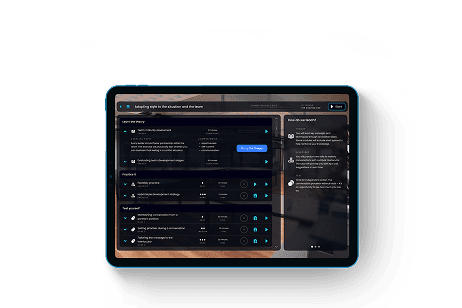
To help teams practise these conversations in realistic scenarios, explore our AI sales training solution.
How to Tailor Your Closing Style to the Client’s Personality
People make decisions differently. The same message might motivate one person but put another off. Tailor the way you ask for a decision to the other person’s style.
Decisive vs. Indecisive Client
A decisive client likes a fast pace and specifics. Ask directly, but offer a choice: “Do we start on Monday or Wednesday?”; “Pro or Standard plan?” Keep pauses short and minimize digressions.
An indecisive client needs risk mitigation. A trial period, a shorter contract, or a conditional agreement will work: “If you don’t see X in the first month, we’ll end our partnership with no consequences.” Add social proof and a calm tone.
Analytical vs. Intuitive Decision-Makers
The analytical decision-maker expects numbers, options, and risk assessments. Close the deal with a tabular comparison, an ROI calculation, and a precise timeline. Try this phrase: “Do we accept Option B: cost Y, return after 5 months, launch on the first day of the quarter?”
An intuitive decision-maker decides faster when they see a picture of the future. Describe a brief “day after implementation” scenario and ask: “Is this outcome sufficient for you to start next week?”
Sample phrases and questions to help close the deal
Treat these ready-made phrases as rough drafts. Adapt the wording to the context and the person, and only then use sales closing techniques.
Alternative question
“Would you prefer to start with Package X or Y?”; “Online signature today, or by 12:00 tomorrow?”; “Demo for the sales team on Thursday at 10:00 or 14:00?”
Assumed Close
“I’ll send the contract with the scope we confirmed today—by when should I schedule the start date?”; “I’ll book the implementation date for the 15th—if needed, we can push it back a week.”
Conditional closure
“If we don’t reach X in the first 30 days, we’ll activate Plan B”; “If your previous vendor settles up with you by the end of the month, we’ll start on the 1st of the following month—is that confirmed?”
Objections Just Before the Decision—How to Defuse Them
It’s too expensive
First, ask: “Compared to what?”; “Which part of the cost concerns you the most?” Then return to the benefits and calculate the costs per unit of value (e.g., cost per user, per lead, per month of savings).
Offer different scope options instead of cutting the price. “We have three options: A—full scope; B—a scaled-down launch; C—a 30-day pilot. Which scenario best fits your budget and timeline?”
I need to think about it
Make sure you know exactly what requires consideration: “What specifically do you want to evaluate?”; “What condition must be met for the decision to be a ‘yes’?” Also set a timeframe and the next step: “So we’ll revisit this on Wednesday at 10:00 a.m.—should I send an invitation?”
Send the proposal—I’ll let you know
Agreed, but let me lead the process: “I’ll send a brief summary today with three options. Let’s schedule 15 minutes to discuss the details—Thursday at 11:30 a.m. or 3:00 p.m.?” If the client avoids setting a date, ask directly: “Does that mean this isn’t a priority right now, and I should put it off until later?”
Price, discount, value—how to close the deal without undercutting your margin
Closing the Deal Based on Value
The close should tie the benefit to the cost: “Investment Y will result in a cost reduction of Z within 3 months—shall we confirm a start date of the 1st of next month?” Once the value has been calculated and agreed upon, the pressure for a discount decreases.
A bonus instead of a discount
Instead of cutting the price, add something that increases the success of the implementation: additional onboarding, a short training session for the team, or extended support during the first month. The client perceives greater value, and your margin remains secure.
Follow-up after a closing attempt—what to do when the client hesitates
Agreed-upon next step
Don’t end the conversation without setting a deadline. “Let’s schedule a decision for Friday at 12:00 p.m.—I’ll send an invitation. If something comes up, please reschedule.” Make the choice easier: offer two time slots, include a brief recap, and provide a link to the agreed-upon details or to the “full proposal.”
A valuable follow-up instead of just “I’ll check”
Every follow-up adds value: a brief comparison of options, a one-minute video answering a key question, or an example of implementation at a similar company. Avoid empty messages like “Have you had a chance to….” If you don’t get a response, ask about their priority and request quick feedback—this will either pave the way for the next step or allow you to gracefully put the matter on hold.
Closing Mistakes That Cost You Sales
Even the best closing techniques won’t help if the process fell apart along the way. Many lost deals result from simple missteps that can be eliminated.
- Pushing for a decision before the customer has seen the value “for themselves.”
- Failing to provide a brief summary of the key points right before asking for a decision.
- Asking a closed-ended question like “So, are we going ahead with this?” instead of offering a specific alternative.
- Ending the conversation without scheduling the next step.
- Quickly lowering the price without changing the scope or value.
Read more